
The Quiet Expert’s Guide to Podcasting: How to forget the microphone is even there
I have a secret for you.
Some of my best clients and podcast guests I have ever recorded, the ones with the deepest insights and the most engaging stories, were absolutely terrified before we hit record.
They aren't actors or broadcasters. Many of them aren't professional speakers.
They are simply experts in their field. They are CEOs, real estate agents, accountants, architects, HR managers, sports people and small business owners who know their stuff inside out, but freeze up the moment they see a red light.
We call it "Red Light Fever." It’s that moment where your brain goes blank just because you know a machine is listening.
If you have been holding back from starting a podcast because you hate the sound of your own voice or the idea of "performing" makes you sweat, this is for you.
Here is how to podcast when you’re a quiet expert, and how to completely ignore the microphone and the camera.
1. Stop Trying to "Perform"
The biggest mistake people make is thinking they need a "Podcast Voice." You know the one, suddenly deeper, louder, and incredibly fake.
When you try to perform, your brain has to do two things at once: remember your expertise and act like a radio host. It’s too much processing power.
The goal isn't to be a presenter; it’s to be you and the best version of you, in your zone.
The best conversations happens when you drop the act. If you stumble over a word? Who cares. If you take a second to think? That shows you are actually considering the answer.
Authenticity beats perfection every single time.
2. The "Kitchen Table" Effect
Traditional studios can be scary. They are often cavernous spaces that feel completely artificial. You’re sitting under bright lights, staring down the barrel of bulky cameras, and trying to remember what you wanted to say.
That’s why I don’t rely on studios.
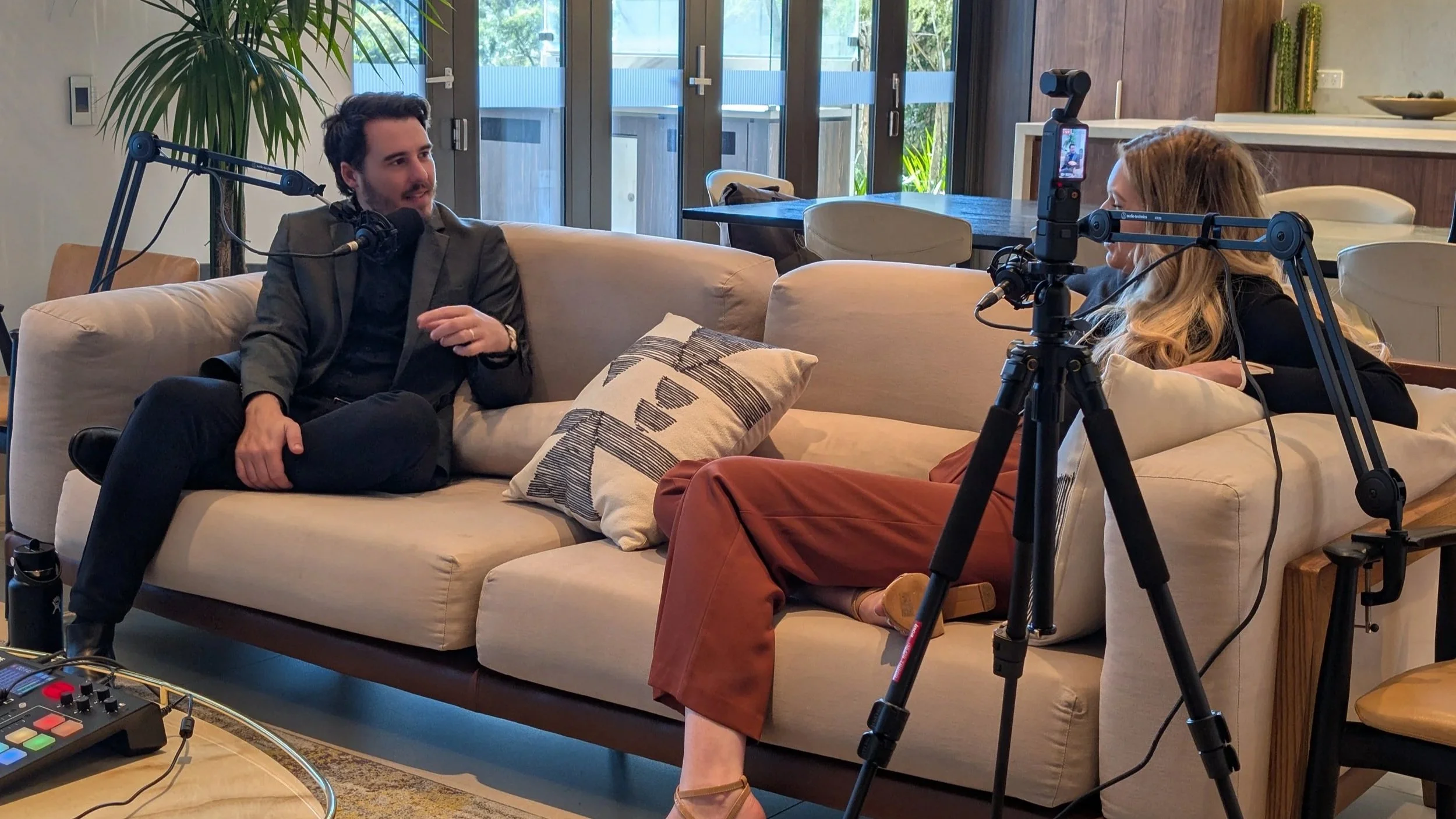
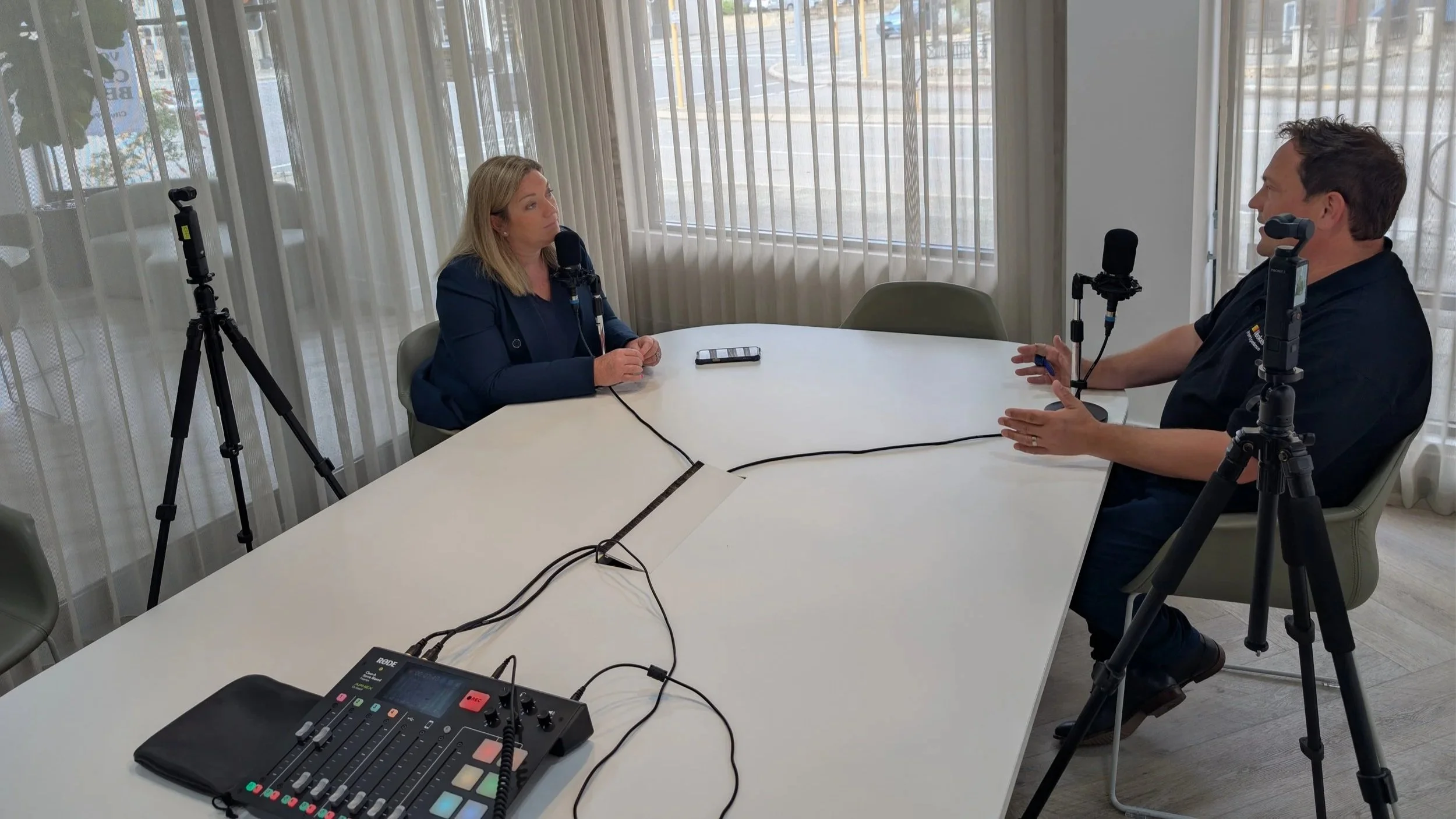
At Perthspective, I bring the studio to you. We sit at your meeting table, or even in your lounge room. We push the gear to the side. I want the environment to feel exactly like it does when you’re having a coffee with a client.
If you are comfortable in your space, your voice relaxes. You stop trying to broadcast and you start to communicate.
3. The "You Talk, I Tech" Rule
A lot of the anxiety comes from the gear. Is the level right? Is the battery charged? Did I hit record? Am I too close to the mic?
Here is my friendly reminder for my clients: Don’t touch the gear
That’s my job. I am the "Tech." You are the "Talent."
I use professional but discreet, low-profile equipment that fades into the background. I monitor the audio levels so you don't have to wear headphones if you don't want to. Your only job is to look at me (or your co-host) and have a chat.
I’ll worry about the SD cards; you just worry about telling your story.
4. Eye Contact is Your Anchor
Here is the ultimate trick to ignoring the microphone: Don't look at it.
Lock eyes with the person you are talking to. Humans are hardwired for connection. When you look someone in the eye, your brain switches into "Conversation Mode." You forget the camera is there. You forget the microphone is clipped to your shirt. You just tell the story to the person in front of you.
You don't need to be a loud personality to have a voice. In fact, the world probably needs more quiet experts sharing their knowledge and fewer loud noises.
Don't let a piece of technology silence your expertise.
Ready to have a chat? No pressure, no pushy sales, just a conversation to see how easy it really is. Book your FREE Discovery Session